Beginners Guide to Mushroom Foraging on Mount Hood
Ask the experts and many will tell you the Pacific Northwest is one of the best places in the world to forage edible mushrooms. While Oregon is in the lowest reaches of that territory, its mycological diversity is tops. People travel to the coastal range in waves to pick from a wide variety of wild fungi. That’s just fine by us, because we like that our mushrooming territory is one of Oregon’s best kept secrets.
Beginning with the basics, mushrooms are only the reproductive part of fungus. For most species, what you see above ground is just the tip (ahem). The real action happens in a vast network of tiny cells called hyphae weaving underneath your feet. That’s why mushroom harvesting is naturally sustainable: picking a mushroom is like picking a grape from the vine.
The mystery of mushrooms doesn’t stop there either, making foraging an intimidating idea. Thankfully, we have a few pointers to get you headed in the right direction, which is a perfect starting place.
It’s Called Hunting for a Reason
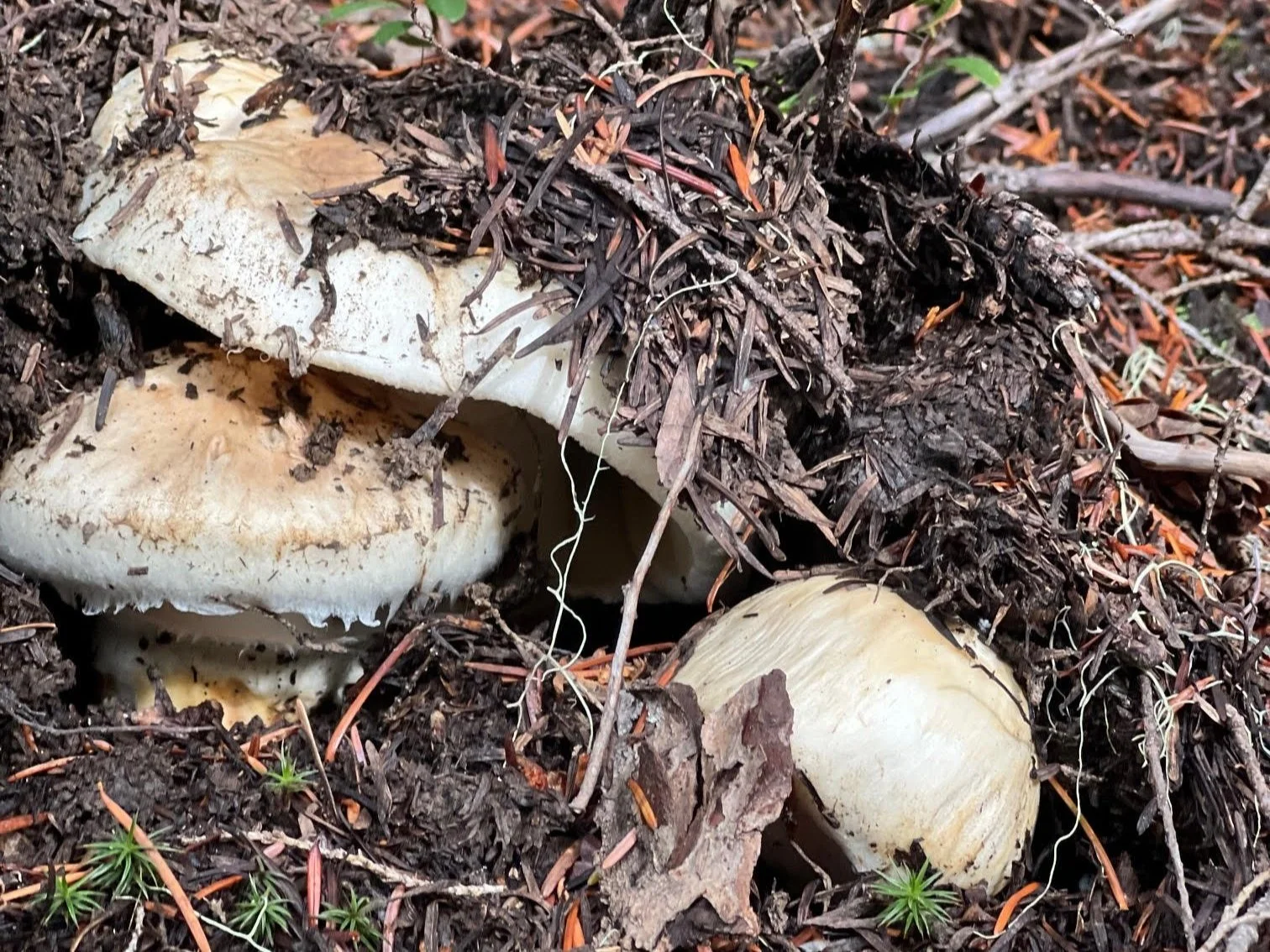
Mushrooms are abundant in Oregon’s Mount Hood Territory, but that doesn’t mean finding them is easy. First, they are small and less prolific in comparison to the sprawling kinnikinick, tangly oregon grape and towering trees they grow under and around. Their short stature also means they are often barely peeking out from underneath the pine duff and detritus.
But the biggest challenge of all is knowing where and when they are growing. A skill that is part science, part magic. Experts painstakingly track the altitude, weather, biomes (get to know your companion plants) and exact locations to find their fungi. You can study up with region-specific identification books and join your local mycology club to learn from the experts. Or…you can start where we did; schedule an expert-led hunt.
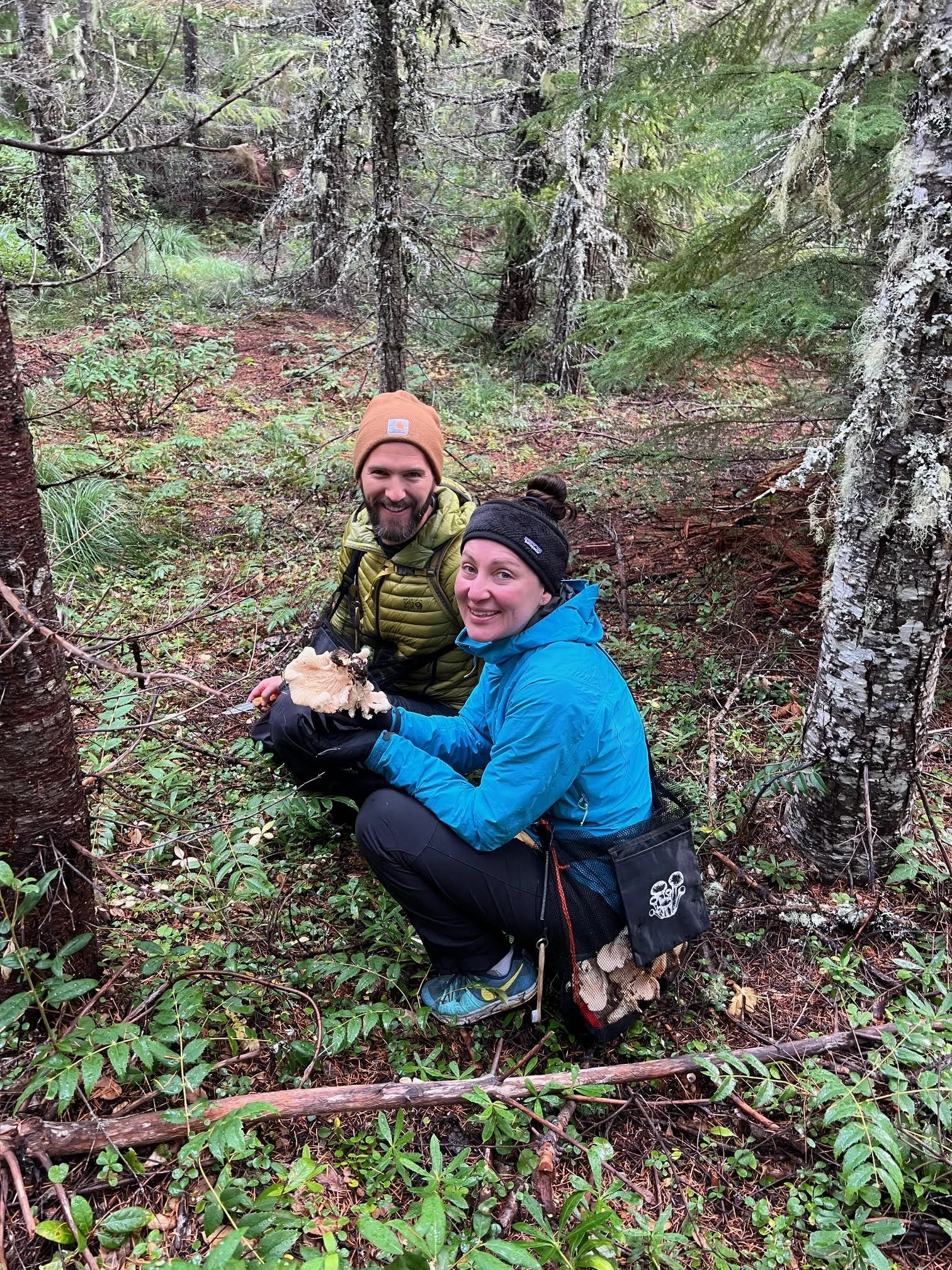
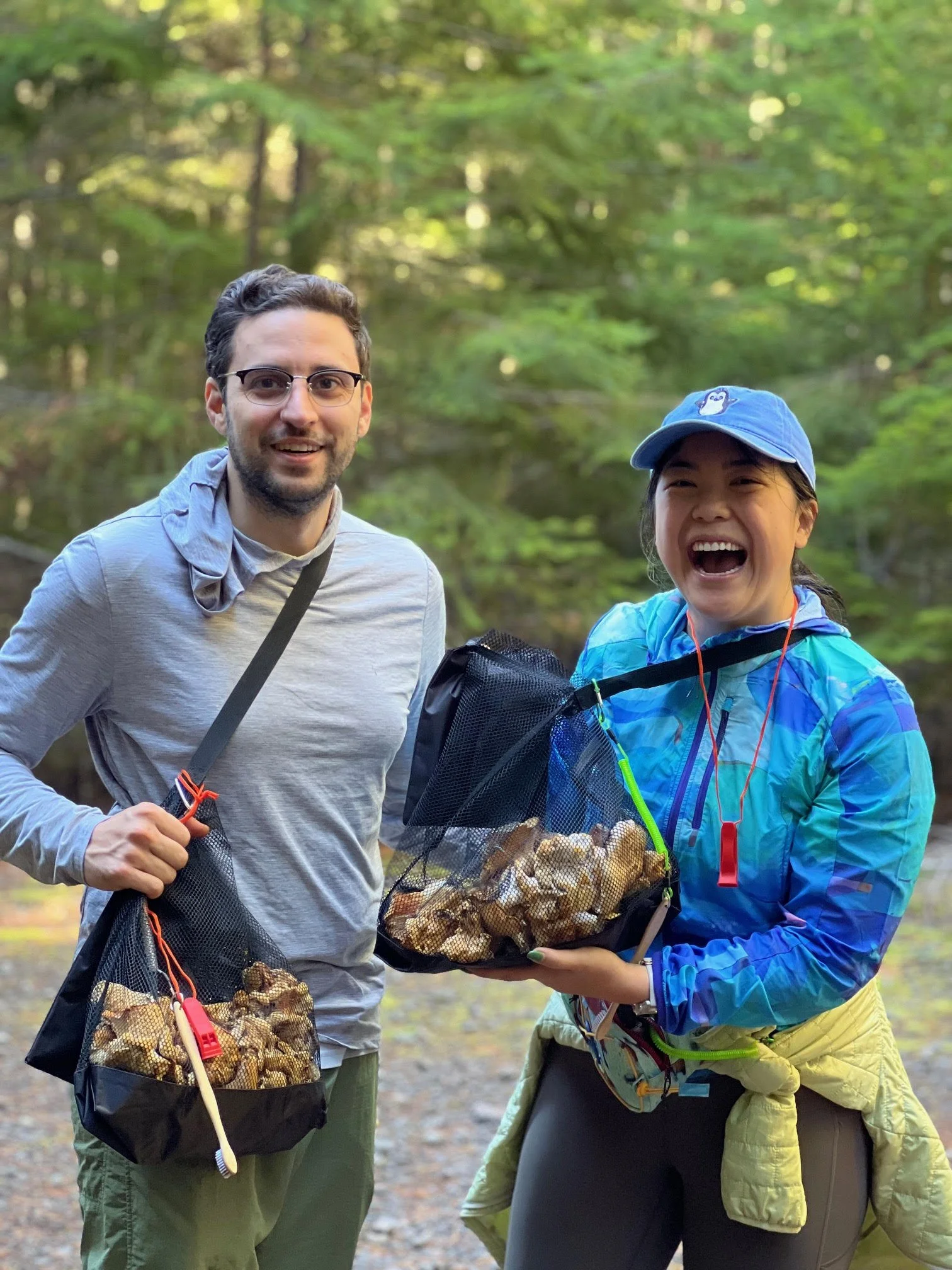
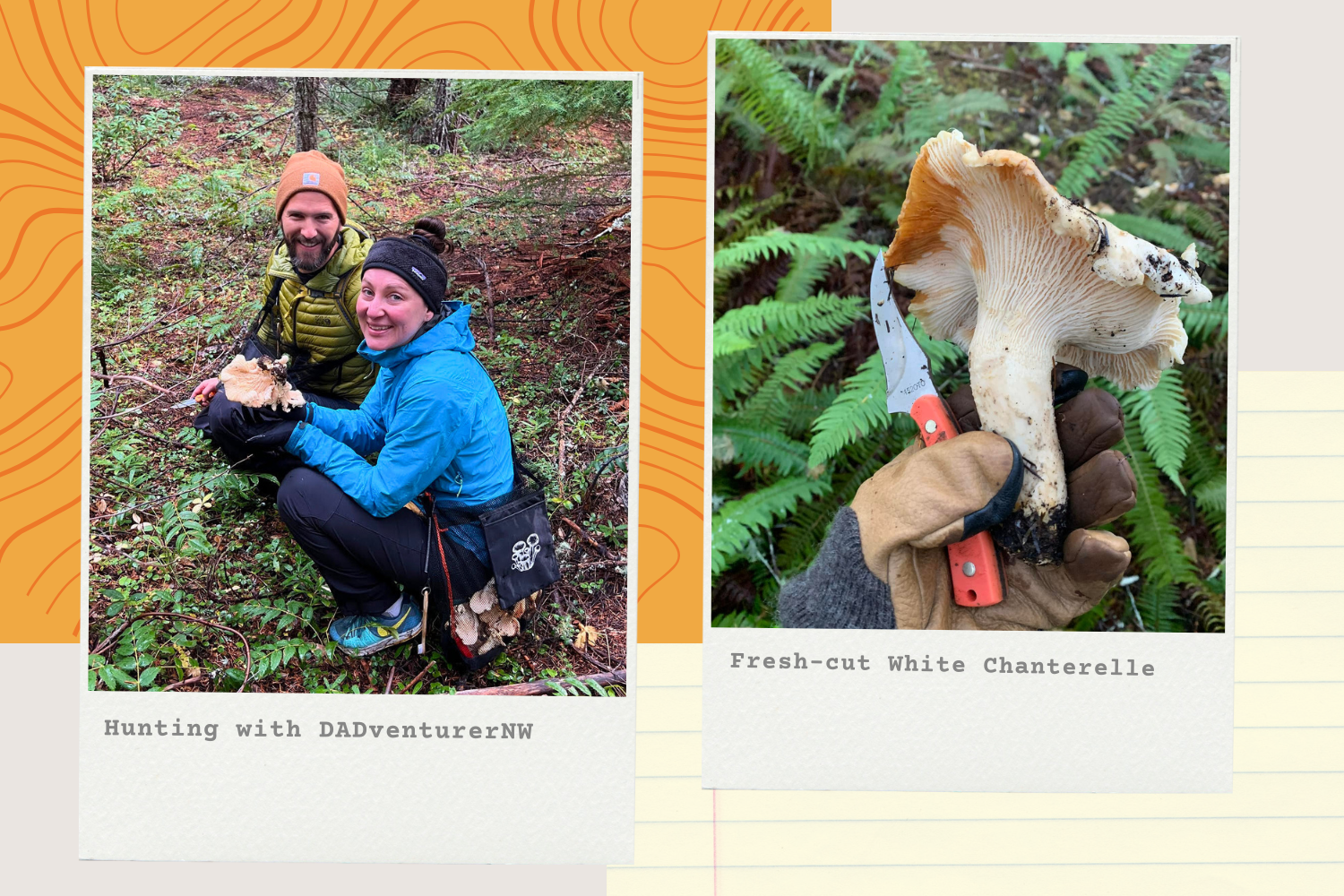
In our opinion, there’s only one option on Mount Hood, and that’s an outing with Cosmo D’Aquila of DADventurerNW. He goes on regular scouting trips to ensure his clients leave with a bag full of mushrooms. Literally, we have photo evidence. There’s so much more to his outings, so make sure to read our complete guidebook entry documenting the experience. And, if you stay with us, Cosmo will even give you 20% off your first hunt.
If you’re determined to try harvesting on your own, we suggest reading this entire blog and starting with the US Forest Service Mushroom Maps linked below.These maps outline where mushroom gathering is allowed for personal use on Mount Hood:
Call or visit the Zigzag Ranger Station for more information on these maps and mushroom foraging in the Mt. Hood National Forest. Rangers put boots on the ground daily, so they have the intel on what areas are overharvested and what elevations have active growth.
Delectable or Dangerous: Wild Mushroom Identification 101
Just like finding them, knowing how to identify frying pan-worthy mushrooms is a challenge. The process involves inspecting the body form, cap features and stem (also known as a stipe) based on their size, shape, color, texture and smell. That might seem like a lot, but with a little experience you’ll be bagging boletes and munching morels confidently.
We rely on a few field guides that line our shelves at the Mount Hood Alpine Chalet, but we will dish the details on a few of our favorite finds here.
Morels
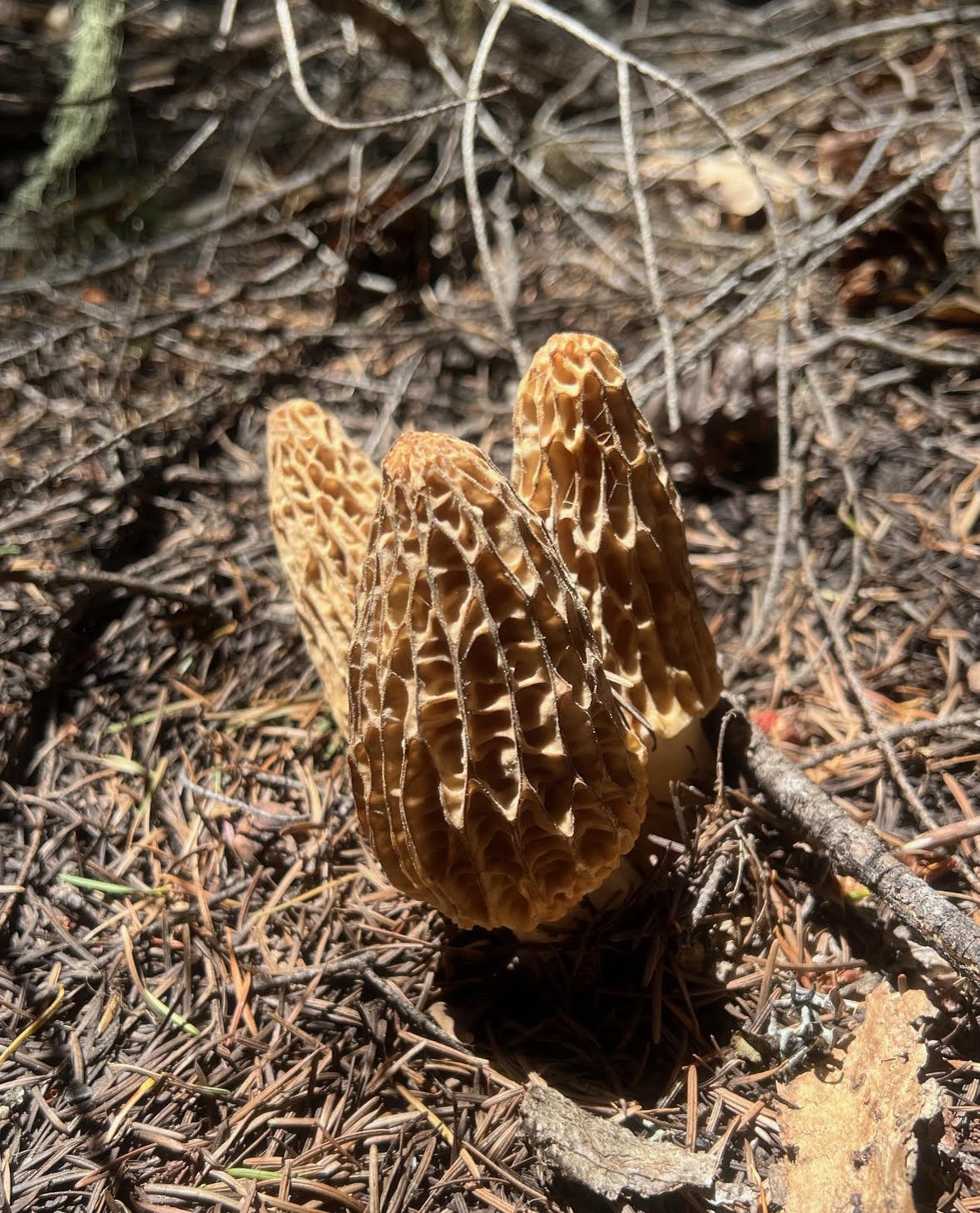
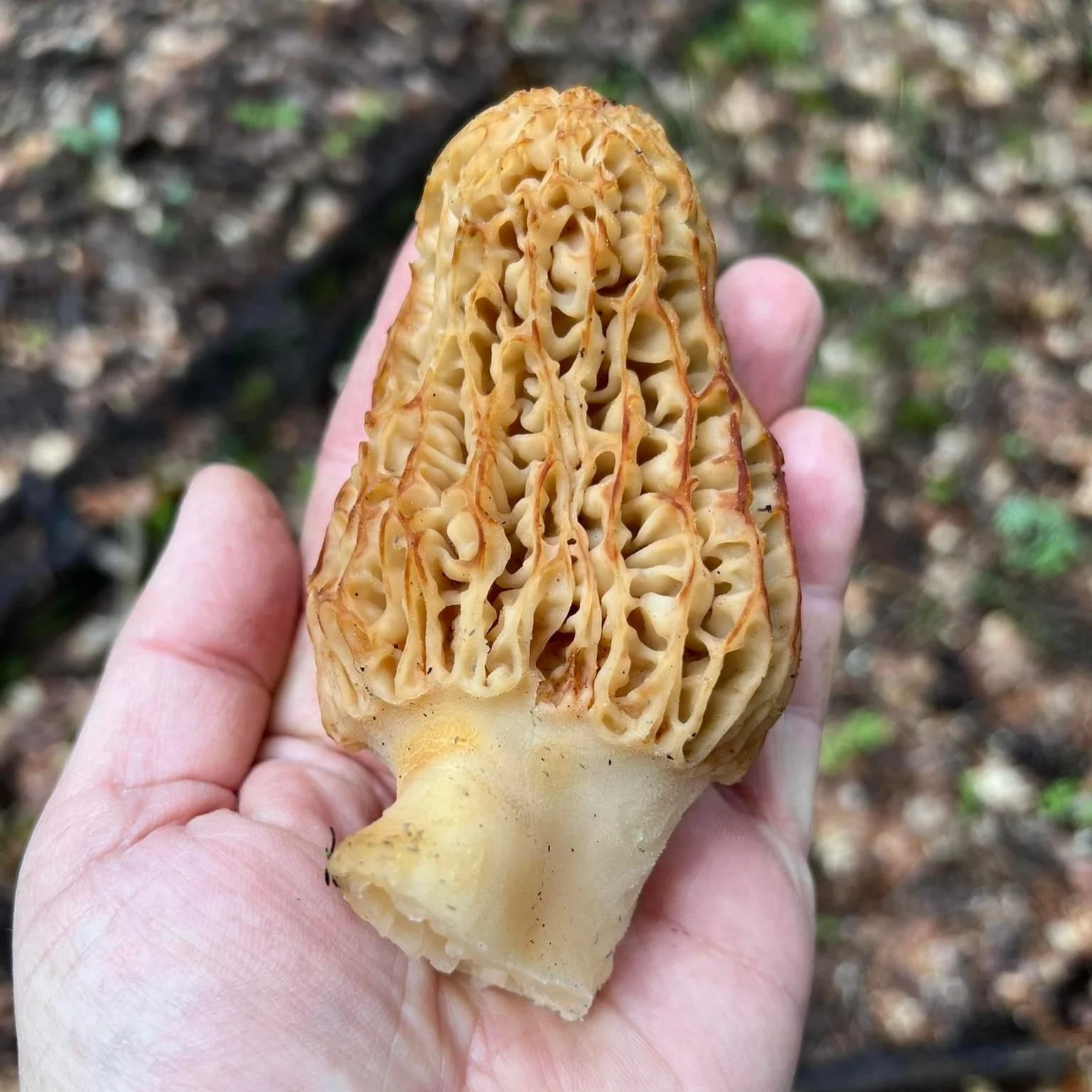
An iconic mushroom pops up every spring with its pitted caps that resemble a honeycomb or sponge. Caps are usually uniformly conical and completely connected to the stem. They darken with age from pale cream to yellowish- or mid-brown. There are false morels that grow at the same time, including the poisonous “beefsteak morel.” The best way to know you have the real deal is to slice the mushroom lengthwise. Morels are completely hollow from cap to stem and have no cottony material inside.
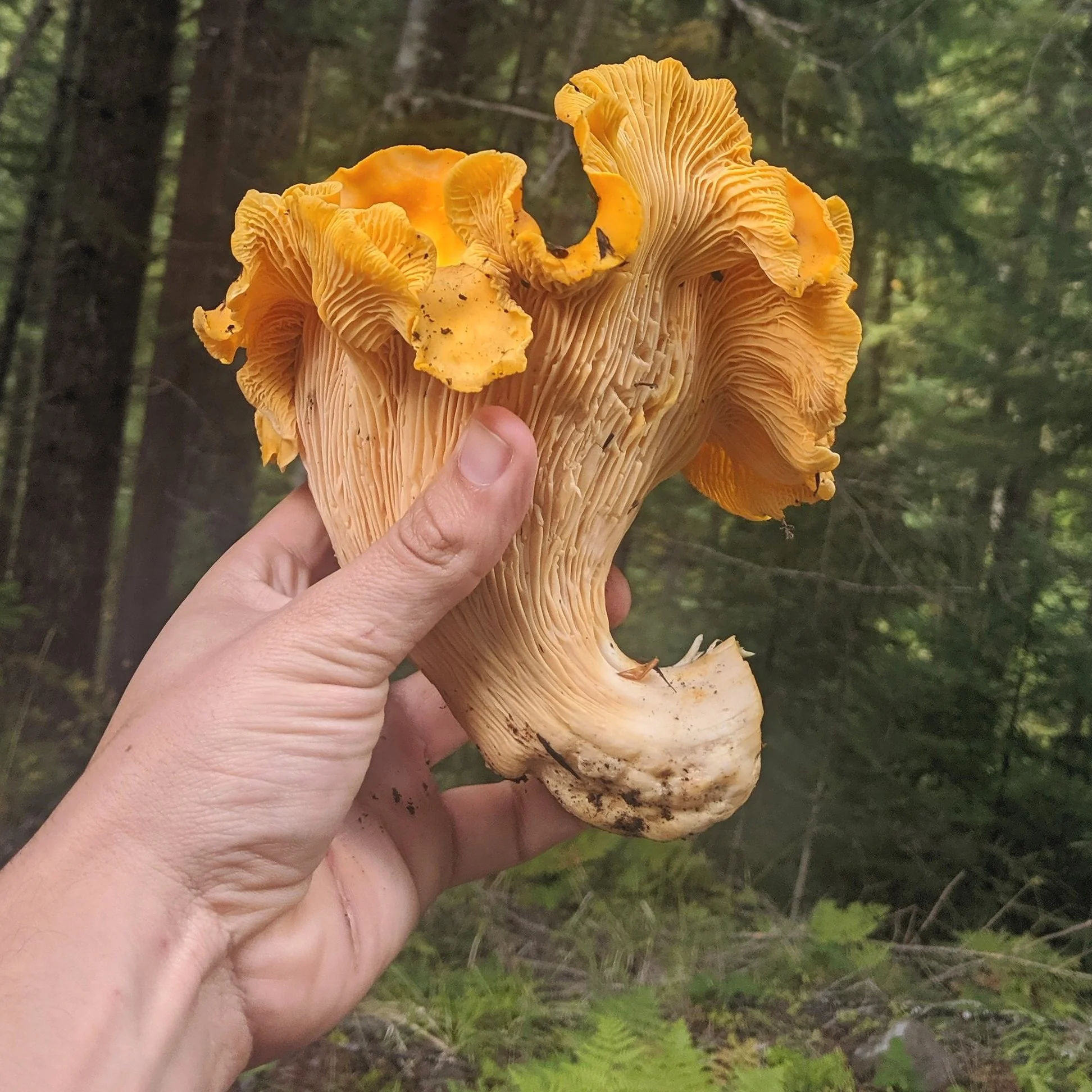
Golden Chanterelles
Characterized by their vibrant yellow color, trumpet-like shape, and apricot-like aroma, these mushrooms have a delicate, slightly fruity or peppery taste. Chanterelles don't have true gills, but instead feature forked, rounded folds. There is a false chanterelle species that is not seriously toxic, but should be avoided. The major difference can be found in the meat. When you break apart a true chanterelle, the inside should be white and its fibrous texture resembles string cheese.
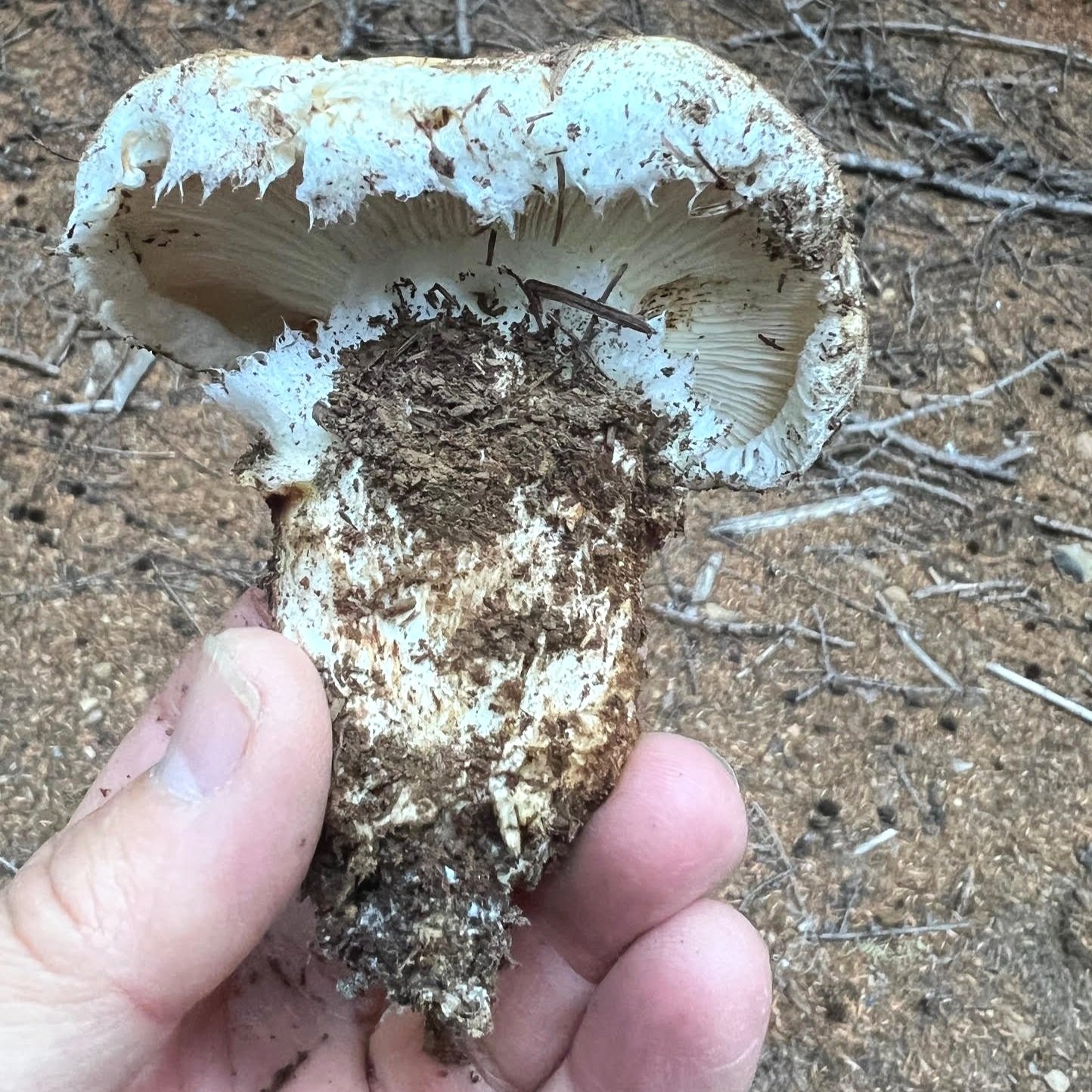
American Matsutake
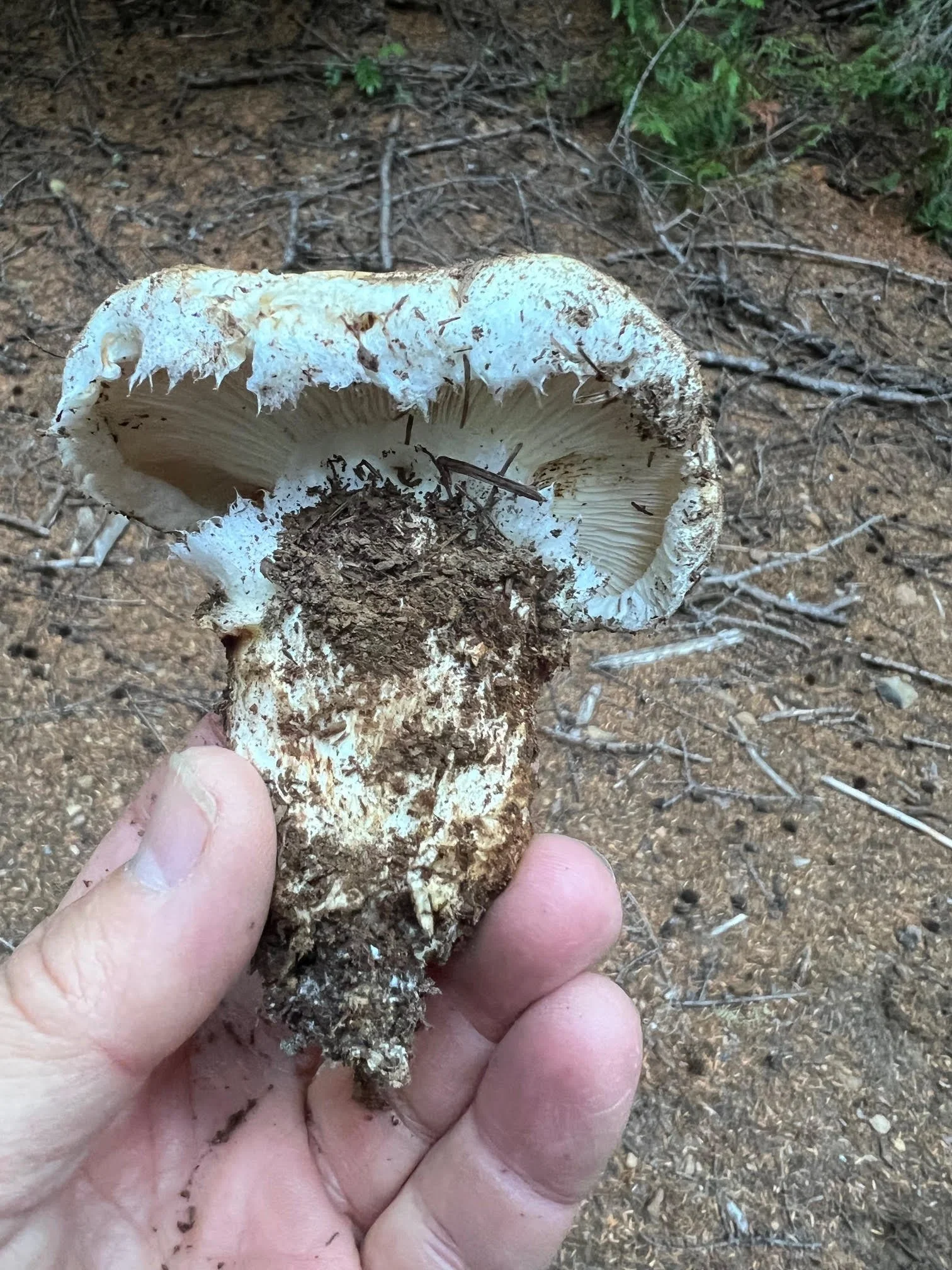
Known as the “King of Mushrooms” in Japan, Matsutakes can fetch $1,000 per pound for their delicious flavor. These have thick, scaly stipes and large, white to brownish caps with gills. The key identifier is its strong, distinctive cinnamon-like aroma. Some compare it to Red Hots and others say its more like a radish. If you give the firm stipe a hard squeeze it will not break, which is a test that the Amanita smithiana (it’s deadly lookalike) can’t withstand.
Thankfully, you can touch any mushroom you want (they are not poisonous dart frogs). Just don’t eat anything solely on the basis of what you’ve read here. If improperly identified, mushrooms can pose serious health risks because some varieties are poisonous, and as you may have noticed, some are dead-on doppelgängers for their edible cousins. That’s why it’s good to go out with an expert, reference an identification guide religiously and be 100-percent sure before consuming any mushrooms. Always follow the mushroom code: If in doubt, throw it out. And always clean and cook your finds thoroughly before digging in.
When’s Mushroom Hunting Season?
It’s surprising that spring and fall are the quiet seasons on Mount Hood, because those are the seasons you can find the most mushrooms pushing up. Rainfall plays a significant role in mushroom growth. All species grow and sprout just after rainfall, when the forest floor is soft and damp, so look for periods with recent rain. Elevation is another major factor.
To give you the rundown on our list of favorites, morels burst forth after the snow melts in the eastern Cascades in spring. While the ideal elevation rises week by week, these beauties will poke out between March and May. Chanterelles and Matsutakes push up in fall and follow a similar elevation pattern from Labor Day to Veteran’s Day, but they are more at home on the west side.
Some swear they’ve found the elusive summer mushrooms too. The wetter the year, the better. Test your skills in the later months by looking for chicken of the woods, summer oyster mushroom and lobsters. Our advice is to stick to the shoulder seasons if you want to take home a big haul though.
Mushrooming Hunting Permits, Guidelines and Supplies
You can hunt mushrooms for personal use in the Mount Hood National Forest without a permit under a set of new-ish ”incidental use” guidelines. At the time of this writing, you could pick up to 1 gallon of mushrooms per day and 10 gallons annually, but make sure to check the link before you go.
The Forest Service advises gleaners to pluck or cut (no digging) mushrooms with minimal disturbance to the surrounding forest floor. This protects the mycelial mat, which also means you can return year after year to find more mushrooms growing freely. Here are some other best practices to harvest wild mushrooms responsibly:
Tread lightly while searching for mushrooms
Use extraction tools no larger than one-inch wide
Fill in any divots made while collecting
Collect using a mesh bag or basket to help spread spores
Hike with a buddy if possible and wear bright clothing to alert hunters
Helping ensure Mount Hood’s plentiful mushrooms don’t disappear is important, but don’t forget about your own safety. The best hunting grounds are off trail, which increases the risk of injury and disorientation. So, bring the ten essentials in your pack and add a safety whistle, walkie talkies and extra water for every person. You can also pin your starting location and use it to track back to the car if you do get lost.
There are other essentials specific to mushrooming: A guide book, GPS app or device, gardening gloves, a foraging knife for extracting the goods, a soft bristled brush or damp towel for cleaning, and a mesh bag or basket for carrying your haul.
Mushroom Foraging Grows On You Fast
We still remember our first outing. Walking slowly, looking near every log and under every bush with anticipation. Eventually, we spotted a white chanterelle. Then, another and another. We were hooked, and the obsession only grows as you learn about identification and microclimates.
The joy quickly outweighs any intimidation, and soon enough you’ll become a proficient mushroom forager if you study up, get equipped and get out into the woods regularly. Even if you don’t find your favorite fungi, you’ll still find a good time exploring. From gnome-sized yellowleg bonnets to behemoth boletes and pillowy puffballs to purple-hued violet webcaps, the wonder of the forest never disappoints, and the thrill of the hunt will become all consuming.